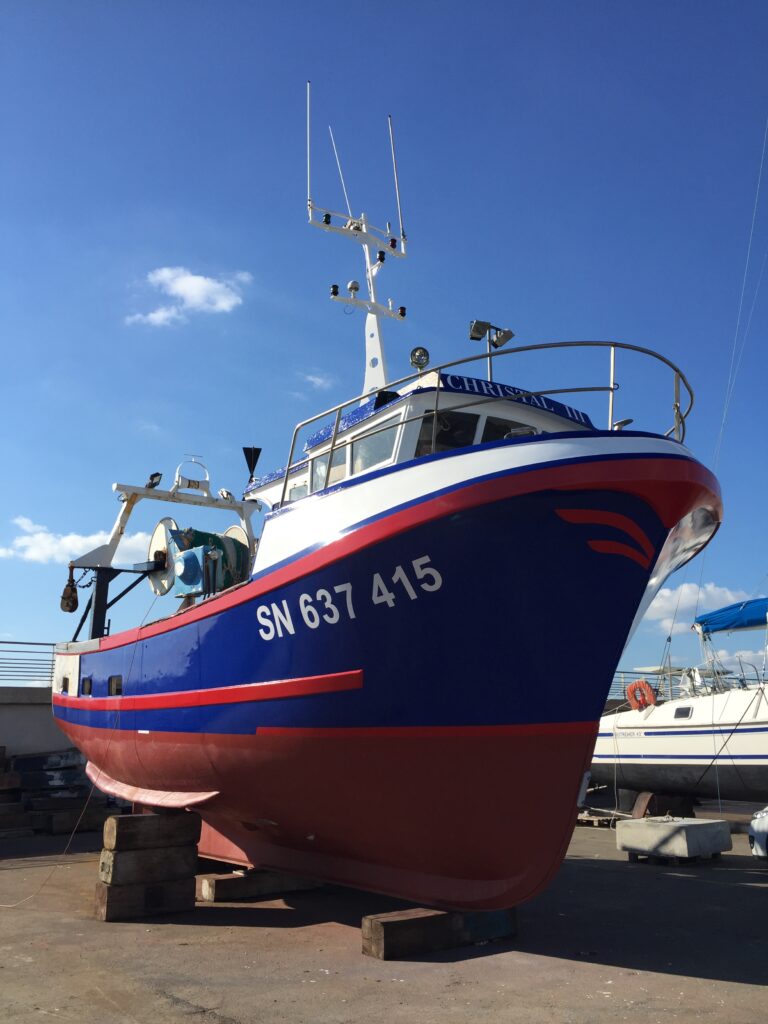



After twenty or thirty years in service, the question always comes up in the wheelhouse sooner or later: do we keep going with this boat, or do we build new? It is a major decision, often the biggest of a skipper-owner’s career. Here is how we approach it at the yard, before we even talk figures.
First criterion: the real condition of the hull
A well-built, properly maintained composite hull ages remarkably well. Unlike steel, it does not corrode. What degrades it is water ingress, untreated delamination and successive modifications poorly integrated over the years.
Our first job is therefore an honest diagnosis: tapping with a mallet, moisture readings, inspection of the structural areas — keel, sternpost, shaft bracket, hull penetrations. If the structure is sound, the hull is no reason to build new. On the contrary, it is the most expensive asset to replace and the easiest to keep.
Second criterion: the gap between the boat and today’s fishing
Many of the vessels we receive were designed for a fishing method that has changed. A trawler converted to dredging, a gillnetter that now carries pots, a vessel whose crew has grown from three to five: the tool no longer matches the use.
This is exactly where a major refit comes in. Lengthening, widening, adding chines, raising a wheelhouse, redesigning the deck layout: these works bring the vessel back in line with its actual fishing. We have been doing them since the yard’s early days, and they often make an older vessel more relevant than a standard new build.
Third criterion: what cannot be repaired
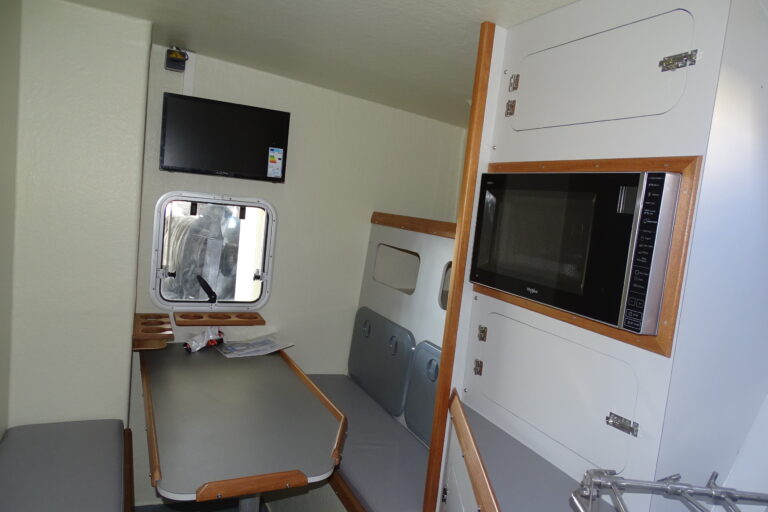
There are, however, situations where a refit reaches its economic limit. When the engine, hydraulics, electrics, electronics, fish hold, interior and superstructure all need redoing at once, the items add up to something close to the cost of a new build — without its remaining service life or resale value.
The second case is geometry. If the intended operating plan requires hull shapes, fish hold volume or power that the existing hull cannot accommodate, no refit will close the gap. It is then better to start from a blank sheet with the naval architect.
Our method: cost out both
We refuse to answer this question in the abstract. In practice, we draw up two comparable quotes: a refit scenario detailed item by item, and a new-build scenario based on specifications written with the owner.
We add two parameters that spreadsheets often forget: downtime — every week at the quay is a lost fishing trip — and the vessel’s residual value after ten years. A well-run major refit keeps the boat out of the water for less time than a new build, but it does not reset the clock.
In most of the cases we handle, the answer is neither one nor the other: it is a refit targeted at two or three decisive items, spread over two technical stops. It still has to be decided on figures, not on a hunch.
Unsure about the future of your vessel? Contact us for a diagnostic visit at the yard in L’Aiguillon-sur-Mer.