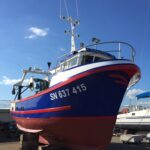



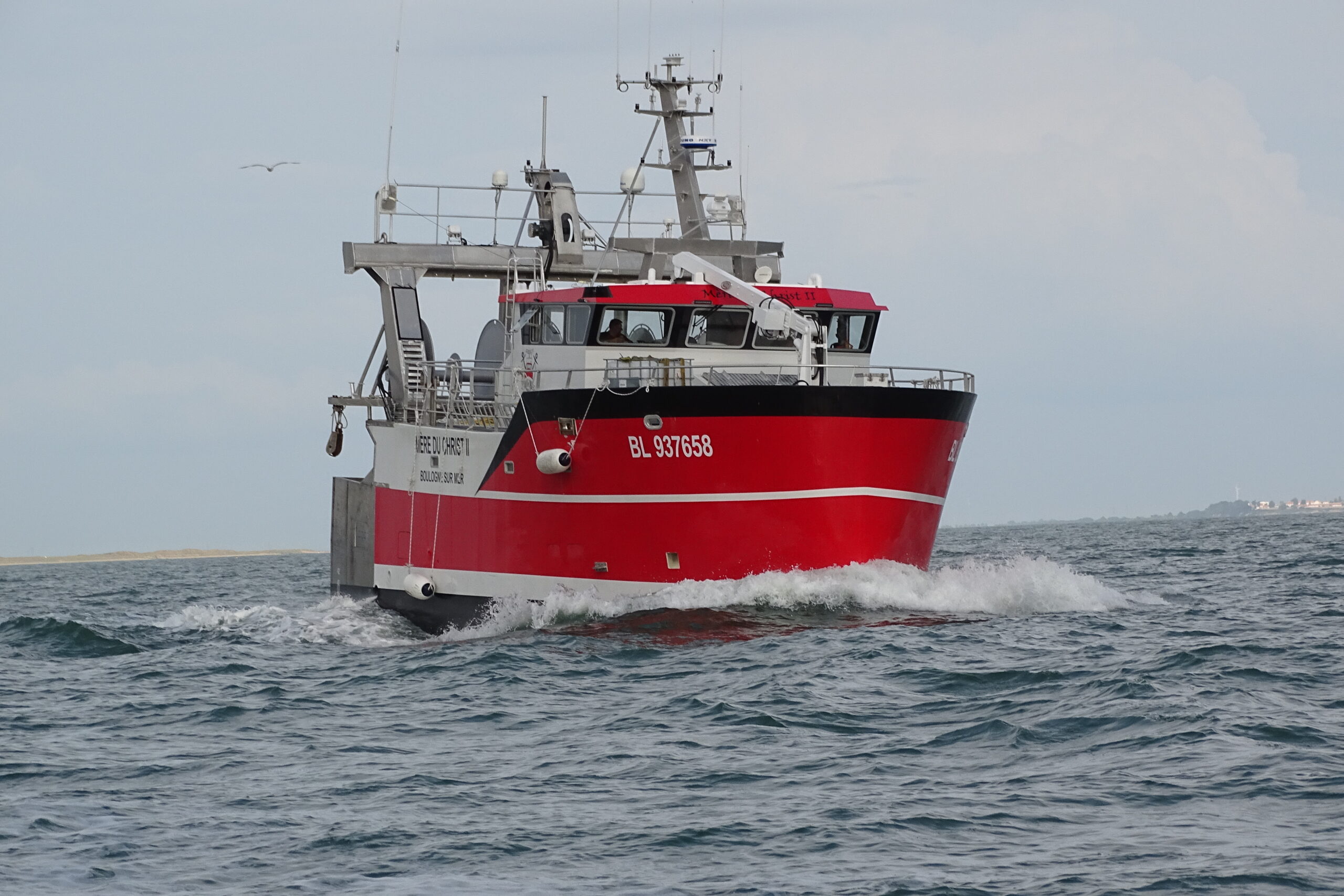
There are two ways to build a fishing boat. The first is to offer a catalog model and let the customer choose a few options. The second is to start from the customer’s fishing. We chose the second in 1985, and it shapes the entire organization of the yard.
The skipper knows his fishing better than we do
That is the starting point. A potter from Morbihan, a scallop dredger from the Bay of the Somme and a Breton gillnetter do not work the same way, do not haul at the same pace and do not handle the same gear.
We master composite, structure, lamination and regulations. The owner masters the reality of work on board: where the net hauler should go so one man can haul alone, what bulwark height saves your back, how many fish boxes the hold must take on a big day. A successful boat comes from combining these two kinds of expertise, not from one without the other.
Three decision points
In practice, our process includes three decision meetings where nothing moves forward without approval.
Design, with the naval architect. This is where hull shape, main dimensions, power and fish hold volume are set. These choices determine everything else: once the hull is laminated, there is no going back.
The deck layout. This is the most hands-on stage. We position every piece of equipment, every drum, every passage. We encourage skippers to walk around in the bare hull and act out the hauling movements. What looks logical on a drawing is not always so on board.
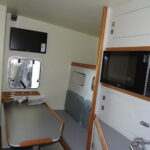
The interior. Wheelhouse, mess room, berths, washrooms. Console height, screen position, which way the lockers open: these details decide whether a crew still feels at home on board three years later.
A team covering every trade
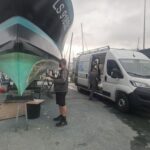
This level of customization is only possible because the yard carries out most trades in-house: lamination, joinery, fitting-out, deck hardware, welding, painting.
When a skipper asks for a change during the build, we do not have to pass the question on to three subcontractors. The relevant workshop is twenty meters away, and the answer comes the same day.
Turnkey delivery
Our commitment does not stop at the hull. We deliver vessels ready to fish: engine, hydraulics, electrics, electronics, gear, safety equipment and regulatory file.
That requires a stable network of suppliers and subcontractors built up over years. It is an invisible asset, but it is what allows us to meet a delivery date and respond quickly when equipment causes problems after commissioning.
The end result
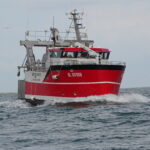
Vessels from 8 to 15 meters that are all different: trawlers, scallop dredgers, gillnetters, potters, longliners, line fishing boats, fast workboats, and even an oceanographic research vessel for the CNRS.
What they have in common is not a model. It is a method.